AI Data Entry

the role of rpa & intelligent document processing in philippine bpo dmbo

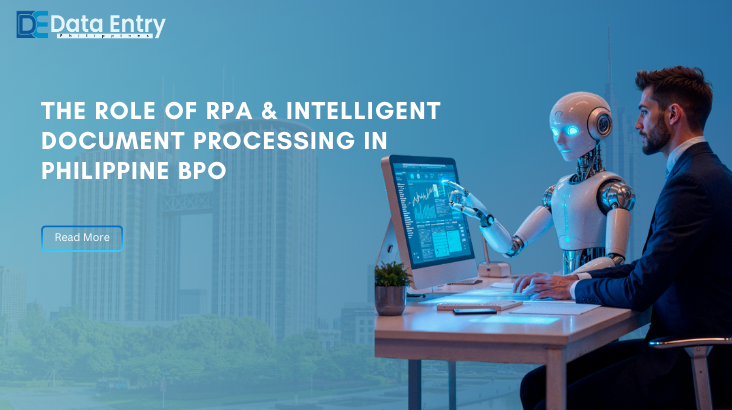
The Role of RPA & Intelligent Document Processing in Philippine Bpo

As organizations around the world — especially in the USA, Canada, UK, and Australia — scale their operations, the demand for smarter, faster, and more accurate business solutions has never been greater. In the global business process outsourcing (BPO) landscape, the Philippines continues to be a top destination for companies seeking reliable and cost-effective support. But in today’s evolving technology environment, traditional outsourcing isn’t enough. Emerging technologies like Robotic Process Automation (RPA) and Intelligent Document Processing (IDP) are transforming how BPO services are delivered — increasing efficiency, accuracy, and scalability for enterprise clients across industries. In this blog, we’ll explore the pivotal role of RPA and Intelligent Document Processing in Philippine BPO, why these innovations matter for global businesses, and how Philippines-based outsourcing providers (including data entry services) are leveraging them to create measurable impact. Understanding RPA and Intelligent Document Processing Before we dive into the Philippine context, let’s clarify what these technologies are: What Is Robotic Process Automation (RPA)? Robotic Process Automation (RPA) refers to software robots or “bots” that automate repetitive and rule-based tasks previously done by humans. RPA works especially well for processes such as: RPA is not artificial intelligence, but it often complements AI when combined with tools like machine learning and Natural Language Processing (NLP). What Is Intelligent Document Processing (IDP)? Intelligent Document Processing (IDP) goes beyond basic automation. It combines AI, OCR (Optical Character Recognition), NLP, and machine learning to extract information from complex, unstructured documents like: With IDP, systems can interpret and classify content, not just read static text. Why RPA and IDP Matter in the BPO Industry Integrating RPA and Intelligent Document Processing into outsourced workflows dramatically boosts productivity and accuracy. Here are the core advantages that global companies care about: 1. Faster Turnaround Times Manual, repetitive tasks slow down operations. When Philippine BPO providers implement RPA and IDP solutions, processes that once took hours can be completed in minutes. This accelerates service delivery, particularly for industries with strict timelines such as healthcare, banking, and insurance. 2. Enhanced Accuracy and Reduced Errors Human error is unavoidable — especially with large volumes of data. By leveraging RPA and intelligent technologies, BPO firms can significantly improve data accuracy and eliminate inconsistencies that could impact compliance or analytics. 3. Scalable Operations RPA bots can be deployed rapidly and scaled up based on workflow demands. Combined with IDP, Philippine BPO centers can handle peak workloads without sacrificing quality — a major benefit for clients in North America, Europe, and Australia. 4. Lower Operational Costs By reducing manual effort and increasing throughput, organizations can enjoy lower costs without compromising delivery standards — a key factor driving the popularity of outsourcing to the Philippines. 5. Increased Compliance and Security Automated processes improve traceability, audit trails, and documentation standards — all of which are crucial for regulated industries like finance and healthcare. How Philippine BPO Providers Are Using RPA & IDP Streamlined Data Entry and Data Management Philippine outsourcing teams that specialize in data entry services are now integrating RPA with IDP to capture, validate, and organize data from various sources — including forms, PDFs, emails, and handwritten documents. This means: For global companies that rely on real-time data, this is a game changer. Efficient Invoice and Billing Processing Many businesses still struggle with manual invoice processing — a time-consuming and error-prone task. With Intelligent Document Processing, Philippine BPO firms can automatically extract invoice data and route it through an RPA-driven workflow for review and approval. Benefits include: Better working capital management Improved Compliance for Regulated Industries Regulated sectors such as healthcare, insurance, and financial services require precise documentation and strict adherence to policies. RPA and IDP help ensure that: This gives clients peace of mind when outsourcing sensitive processes overseas. Smarter Customer Support and Back-Office Automation RPA bots empower customer service teams by automating repetitive tasks like: With underlying IDP technology, even customer communications received in text-heavy documents or emails can be automatically categorized and processed. Real-World Impact: Case Examples To make this more concrete, consider these typical scenarios where automation provides measurable benefits: Healthcare Administration A healthcare provider in the USA outsources patient record processing to a Philippine BPO partner. With RPA + IDP: The result? Clinicians spend more time on patient care and less time on paperwork. Banking and Finance A Canadian financial institution leverages Philippine outsourcing to process loan applications: This speeds up lending cycles and strengthens client satisfaction. Why the Philippines Is Perfect for This Automation Shift The Philippines has become a global leader in BPO — and now in RPA and Intelligent Document Processing adoption — for several reasons: 1. Highly Skilled Workforce Filipino professionals are known for their strong English proficiency, technological adaptability, and attention to quality — all essential for hybrid human-automation workflows. 2. Existing BPO Infrastructure With decades of outsourcing experience, the Philippines already hosts advanced delivery centers, technology frameworks, and cross-border collaboration capabilities. 3. Cost-Efficiency + Innovation Organizations enjoy cost advantages while accessing cutting-edge automation — a combination that sets Philippine providers apart from competitors. 4. Cultural Alignment With Western Markets Strong cultural compatibility with USA, UK, Canada, and Australia helps reduce friction in communication, expectations, and delivery standards. Best Practices for Implementing RPA & IDP With a BPO Partner If your organization is considering leveraging RPA and Intelligent Document Processing through a Philippine BPO firm, here are key best practices: 1. Start With Clear Process Mapping Identify repetitive, high-volume tasks that are best suited for automation. Map existing workflows before introducing technology. 2. Balance Automation With Human Oversight Not all tasks should be fully automated. Combine RPA + IDP with expert human review to ensure accuracy — especially with complex data. 3. Invest in Training and Onboarding Work with your BPO partner to ensure staff understand both the technology and business context. 4. Measure KPIs and Outcomes Track metrics like: This helps build continuous improvement cycles. Conclusion The integration of Robotic Process Automation (RPA) and Intelligent Document Processing (IDP) is reshaping the future of Philippine BPO services

The Role of RPA & Intelligent Document Processing in Philippine Bpo Read More »
Hybrid Human & AI in Philippine BPO Service

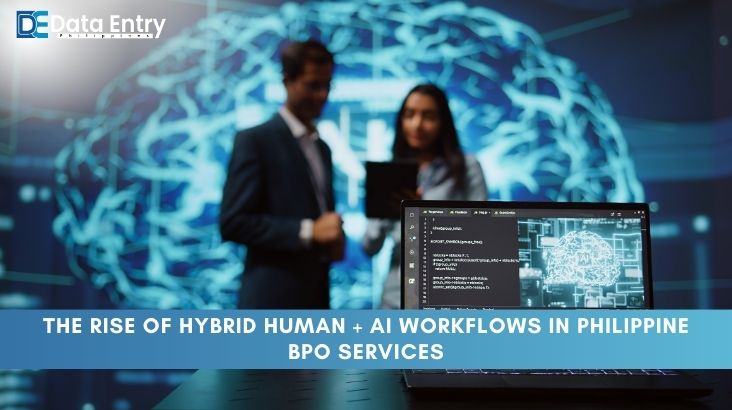
The Rise of Hybrid Human + AI Workflows in Philippine BPO Services

The business process outsourcing (BPO) industry has long been a leader in transforming how companies manage non-core tasks like data entry, customer support, and administrative operations. In recent years, the rapid advancement of artificial intelligence (AI) and machine-learning technologies has ushered in a new era of efficiency and accuracy. Now, a powerful model is emerging — one that combines the best of technology and human expertise: hybrid human + AI workflows. The Philippines BPO industry is particularly poised to benefit from this transformation due to its skilled workforce, strong English proficiency, and established global reputation for quality service. In this article, we’ll explore the rise of hybrid workflows in Philippine BPO services, the benefits for businesses, key applications, and why this trend is reshaping the future of outsourcing. What Are Hybrid Human + AI Workflows? A hybrid human + AI workflow is a work model that integrates artificial intelligence tools with human professionals to improve the efficiency, accuracy, and scalability of business processes. In this system, AI handles repetitive, high-volume tasks such as data extraction and validation, while humans focus on strategic, analytical, and context-driven duties. This cooperative framework combines the strengths of both technology and human judgment. The result? Faster processing times, improved quality, and better business outcomes. Why the Philippines Is Positioned for Hybrid Workflow Adoption 1. Skilled and Adaptable Workforce The Philippines has built a reputation for producing highly skilled professionals who excel in data processing, customer service, and back-office support. Filipino talent embraces continuous learning and adapts quickly to new technologies — a key factor in the successful implementation of AI-enabled outsourcing services. 2. Established BPO Infrastructure The Philippines is one of the world’s largest BPO hubs, with decades of experience working with international clients. This existing infrastructure makes it easier for Philippine providers to integrate digital tools and hybrid processes into their services. 3. English Language Proficiency Fluent communication is essential for understanding workflows and training AI tools effectively. The high level of English proficiency of Filipino BPO agents enables smooth collaboration between teams and supports quality deliverables for global clients. How Hybrid Workflows Are Transforming Philippine BPO Services The integration of AI into traditional BPO operations is already underway, and hybrid workflows are leading the way. Below are several areas where this transformation is most evident: 1. Enhanced Data Entry Services Data entry outsourcing services in the Philippines are now leveraging AI for tasks like optical character recognition (OCR), automated data extraction, and intelligent validation. AI tools can quickly scan documents, extract structured information, and flag inconsistencies — but it’s the human workforce that verifies results, handles exceptions, and ensures contextual precision. This hybrid approach results in: 2. Smarter Customer Support AI chatbots and automated ticketing systems can handle standard queries, provide instant responses, and escalate complex issues. Human agents can then focus on nuanced, emotional, or highly specific customer interactions. This blend improves both customer satisfaction and operational efficiency. 3. Intelligent Document Processing From invoices and contracts to customer forms and medical records, the volume of documents that businesses must process can be overwhelming. AI-powered document scanners and classification systems automatically organize and digitize records, while humans perform quality checks and handle exceptions — enhancing both speed and reliability. Benefits of Hybrid Human + AI Workflows As Philippine BPO services adopt hybrid models, businesses can unlock several powerful benefits: 1. Improved Accuracy and Quality AI tools are excellent at handling repetitive, rule-based tasks with high consistency. However, they may struggle with ambiguity or complex language structures. Human professionals step in to validate, interpret, and correct information, ensuring superior quality control. 2. Faster Turnaround Times Routine tasks that once took hours can now be completed in minutes with AI assistance. When combined with human verification, this dramatically accelerates workflow outputs without compromising accuracy. 3. Cost-Effective Operations Hybrid workflows optimize resource allocation. Businesses can reduce costs associated with manual labor while still benefiting from human oversight where it matters most. 4. Scalability and Flexibility Hybrid models are highly scalable. Whether a client needs peak-season support, larger project teams, or rapid adaptation to new technologies, outsourcing to the Philippines ensures flexible service delivery that aligns with business demands. 5. Enhanced Performance Analytics Integrated systems powered by AI collect and analyze performance metrics in real time. When paired with human analysis, organizations gain deeper insights into workflow efficiency, bottlenecks, and areas for improvement. Challenges in Implementing Hybrid Workflows (and How Philippine BPO Providers Are Addressing Them) While the advantages of hybrid workflows are clear, implementation does come with challenges — and Philippine BPO companies are stepping up to address them: 1. Technology Adoption and Training Integrating AI tools requires training employees and restructuring processes. Many BPO providers in the Philippines are investing in continuous learning programs that educate teams on AI platforms and hybrid workflow management. 2. Data Security and Compliance With increased usage of cloud-based AI systems, data security is essential. Philippine BPO firms adopt robust cybersecurity measures, including encrypted data channels, secure access protocols, and compliance with international privacy standards. 3. Balancing Automation and Human Touch There’s always a risk of over-automating tasks that require human judgment. Successful hybrid models strike the right balance by automating repetitive work while preserving meaningful human intervention for quality and context. Real-World Use Cases of Hybrid Workflows in Philippine BPO Services 1. Healthcare Data Management In healthcare outsourcing, hybrid workflows are used to process patient records, insurance claims, and medical coding. AI tools extract critical fields, categorize documents, and flag anomalies, while human experts verify accuracy and ensure compliance with medical data standards. 2. Financial Back-Office Support Financial firms outsource tasks like transaction logging, account reconciliation, and compliance reporting. AI streamlines extraction and matching, while human analysts focus on exception handling and judgment-based decisions. 3. E-Commerce Catalog Management E-commerce companies rely on timely and accurate product listings. AI can automatically populate product attributes, but human associates refine descriptions, ensure brand consistency, and verify pricing changes. The Future of Hybrid Workflows in Philippine BPO The rise of hybrid human

The Rise of Hybrid Human + AI Workflows in Philippine BPO Services Read More »